
Office Breakroom Sterilization Services in Dallas, TX
Thorough sterilization of office breakrooms for a healthier employee environment.
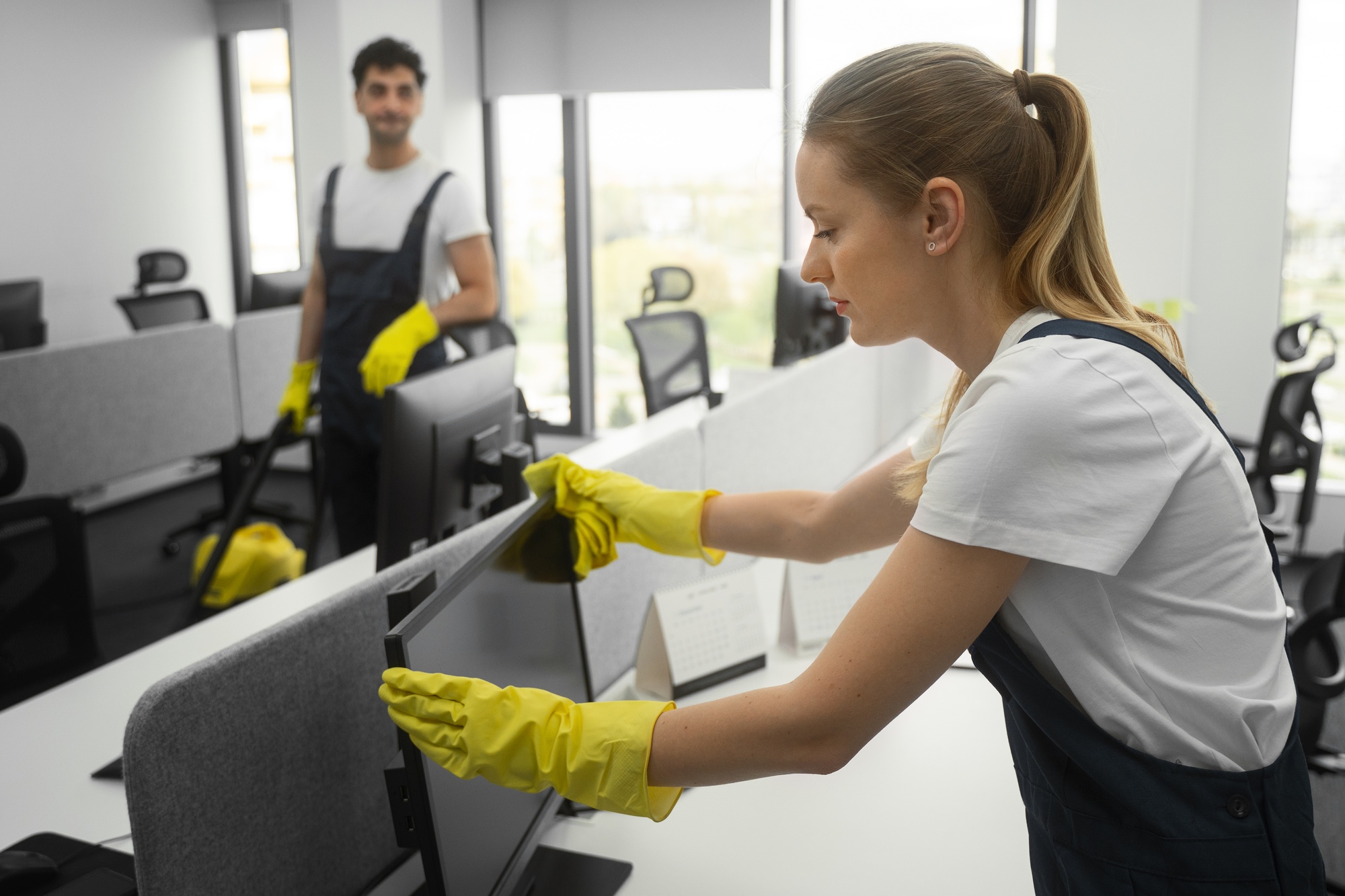
Professional Office Breakroom Sterilization Services in Dallas, TX
The office breakroom is the heart of employee social interaction—a space where colleagues gather, share meals, and recharge during the workday. It's also a high-traffic area where germs can spread easily through shared appliances, surfaces, and food preparation areas. Commercial Cleaning of Texas provides specialized office breakroom sterilization services that help Dallas employers create safe, welcoming spaces for their teams.
Breakrooms present unique cleaning challenges. Food preparation creates opportunities for cross-contamination. Shared appliances like refrigerators, microwaves, and coffee makers harbor bacteria from multiple users. High-touch surfaces including tables, chair arms, and cabinet handles accumulate germs throughout the day. Without proper sterilization, breakrooms can become vectors for illness transmission among employees.
Employee health directly impacts business productivity. When workers become ill, absences disrupt operations and workload distribution. Even minor illnesses reduce productivity and morale. By maintaining properly sterilized breakrooms, employers demonstrate commitment to employee wellbeing while protecting their workforce from preventable illness transmission.
Beyond health considerations, clean breakrooms improve employee satisfaction. A well-maintained break space shows that management values employee comfort and creates an environment where staff want to spend time. Our sterilization services ensure your breakroom remains a pleasant amenity that supports recruitment, retention, and positive workplace culture.
Key Benefits of Our Office Breakroom Sterilization
- -Comprehensive elimination of bacteria, viruses, and foodborne pathogens
- -Reduced employee illness and absenteeism from breakroom germ transmission
- -Sanitization of high-touch surfaces including appliances, tables, and handles
- -Removal of food residue and organic matter that harbors bacteria
- -Elimination of odors from food spills, refrigerators, and drains
- -Pest prevention through removal of food attractants
- -Improved employee morale through clean, welcoming break spaces
- -Protection of shared appliances through proper cleaning and maintenance
- -Safe food preparation environments that meet health standards
- -Flexible scheduling that maintains continuous breakroom availability
Why Choose Us for Office Breakroom Sterilization in Dallas?
- -Experience with breakroom environments across all types of office settings
- -Use of food-safe sanitizers appropriate for surfaces contacting food
- -Knowledge of proper cleaning techniques for breakroom appliances
- -Flexible scheduling including lunch hours, after hours, or weekends
- -Trained staff who respect employee personal items in shared refrigerators
- -Thorough attention to often-missed areas like appliance handles and drawer pulls
- -Odor elimination capabilities that leave breakrooms smelling fresh
- -Discreet service that doesn't interrupt employee break times
- -Documentation of sterilization procedures for facility records
- -Competitive pricing based on breakroom size and service frequency
Our Office Breakroom Sterilization Process
Breakroom Assessment and Planning
We evaluate your breakroom size, appliances, surface materials, and usage patterns to develop a sterilization protocol that addresses all risk areas while accommodating your employees' break schedules.
Appliance Deep Cleaning
Refrigerators, microwaves, coffee makers, water dispensers, and other appliances receive thorough cleaning inside and out. We remove food residue, sanitize touch surfaces, and clean drip trays and filters.
Countertop and Surface Sanitization
All food preparation surfaces, countertops, tables, and high-touch areas are cleaned and then sanitized with commercial-grade disinfectants effective against common foodborne pathogens and illness-causing germs.
Cabinet and Storage Cleaning
Interior and exterior surfaces of cabinets, drawers, and storage areas are cleaned and sanitized. We remove dust, crumbs, and debris while disinfecting handles and touchpoints.
Sink and Fixture Sterilization
Sinks, faucets, and drain areas receive thorough cleaning and sanitization. We remove soap scum, mineral deposits, and organic matter while disinfecting all contact surfaces.
Floor, Wall, and Detail Cleaning
Floors are swept, mopped, and sanitized. Walls, backsplashes, light switches, and door handles receive attention. We complete the service with a final inspection to ensure thorough sterilization.
Frequently Asked Questions About Office Breakroom Sterilization
How often should office breakrooms be sterilized?
Most office breakrooms benefit from daily or several-times-per-week sterilization, with daily service recommended for larger offices or during cold and flu season. We can assess your employee count, breakroom usage, and specific concerns to recommend an appropriate schedule.
Will you throw away employees' food from the refrigerator?
We typically don't remove employee food items unless specifically directed by facility management. We clean around items in refrigerators and can coordinate with you regarding any food removal policies your company has established.
Are your sanitizers safe around food?
We use commercial-grade sanitizers approved for use on food contact surfaces. After application, we follow proper procedures to ensure surfaces are safe for food preparation. We can discuss specific product preferences if your facility has particular requirements.
Can you clean breakrooms while employees are using them?
We can work around employee break times, cleaning sections while others remain available for use. Many offices prefer us to sterilize during lunch hours when breakrooms see less use, or after hours for comprehensive service without any disruption.
What about coffee makers and water dispensers?
We thoroughly clean and sanitize coffee makers, including carafes, reservoirs, and exterior surfaces. For water dispensers, we sanitize touchpoints, drip trays, and accessible surfaces. We follow manufacturer guidelines to avoid damage while ensuring hygienic conditions.
Do you help with pest problems in breakrooms?
While we're not pest control specialists, our thorough cleaning and removal of food residue helps prevent pest attractants. If we notice signs of pest activity, we alert facility management so appropriate pest control measures can be taken.
Create a Healthier Breakroom for Your Team
Show your employees you care about their wellbeing with professional breakroom sterilization. Contact Commercial Cleaning of Texas for thorough cleaning that keeps your team healthy and happy.
Schedule Your ServiceCall (214) 856-7886Create a Healthier Breakroom for Your Team
Show your employees you care about their wellbeing with professional breakroom sterilization. Contact Commercial Cleaning of Texas for thorough cleaning that keeps your team healthy and happy.
Schedule Your Serviceservices planning guide
How to plan office breakroom sterilization for a commercial facility in Dallas
Commercial Cleaning of Texas uses the following planning framework to help property managers and business owners turn a request for commercial cleaning and facility maintenance into a scope that can be walked, priced, scheduled, and checked. It is designed for practical comparison and does not replace site-specific safety, material, vendor, or regulatory requirements.
Define the Work Before Pricing It
Before pricing office breakroom sterilization, document exclusions as carefully as inclusions. Exterior work, high access, consumable supplies, waste handling, specialty floor restoration, equipment interiors, and event cleanup can be scheduled correctly only when responsibility is explicit. A walkthrough for office breakroom sterilization is most productive when the decision-maker identifies the spaces that create complaints, the areas that carry the most traffic, and the tasks the current program misses. Those observations turn a generic checklist into a practical scope tied to the way the property is actually used. A commercial scope should distinguish appearance cleaning from hygiene work and asset maintenance. Dust removal, disinfection, floor finish care, glass restoration, and debris control solve different problems, use different processes, and often belong on different frequencies. Change orders are easier to avoid when the initial office breakroom sterilization proposal records current conditions. Photographs, floor-type notes, access limitations, and known buildup give both sides a shared baseline for deciding what belongs in startup work and what belongs in recurring maintenance.
Build the Schedule Around Operations
Scheduling should be built around operating hours and risk, not around the cleaning company’s convenience. Some commercial facility environments need a complete after-hours reset, while others benefit from daytime attention to entrances, restrooms, spills, or high-traffic common areas. Access planning is part of service planning. Keys, badges, alarm procedures, loading access, elevator reservations, escort rules, and locked-room approvals should be confirmed before the first office breakroom sterilization visit so the crew can complete the full scope without improvising. A nightly, daily, weekly, or project schedule changes more than visit frequency. It changes how much soil accumulates between visits, which tools are appropriate, how long each visit takes, and whether periodic deep work must be layered into the agreement. Recurring office breakroom sterilization should include planned periodic work instead of waiting for visible deterioration. Rotating detail tasks through monthly or quarterly cycles protects floors, fixtures, glass, vents, edges, and other zones that routine visits cannot address completely.
Make Quality Control Observable
Quality control works best when it is tied to the site-specific scope. A supervisor can inspect completion against named rooms and outcomes, record exceptions, assign corrections, and identify patterns that require a change in staffing, tools, or frequency. Consistent crew assignments improve office breakroom sterilization because the team learns access routines, material sensitivities, recurring problem areas, and the expectations of the facility contact. Coverage plans are still necessary for absences so consistency does not depend on one individual. Useful performance conversations separate an isolated miss from a recurring process failure. One unemptied bin requires correction; repeated misses in the same wing may indicate unclear zoning, inadequate time, or a checklist that does not match the building. The account review should examine service requests, inspection findings, occupancy changes, supply use, and upcoming facility events. That review keeps the program aligned with the property instead of allowing an old scope to continue after the building changes.
Match Methods to Materials and Risk
For sensitive or newly installed materials, a small test area can prevent expensive mistakes. The service plan should identify who approves the test result before broader cleaning or restoration proceeds. A material-safety discussion should include storage and labeling. Facility contacts should know where products and equipment will be kept, which rooms remain accessible to occupants, and how spills or damaged containers are reported. Dwell time and physical removal are central to effective cleaning. A product cannot perform as intended if it is wiped away immediately, and loosened soil still needs to be removed with clean tools rather than redistributed across the surface. Surface identification matters because a process that works on one material can damage another. Before office breakroom sterilization, confirm flooring, stone, coated metal, glass treatments, upholstery, painted surfaces, and manufacturer restrictions that affect chemistry or agitation.
Use the Walkthrough to Build the Scope
Access and safety constraints should be demonstrated, not merely mentioned. Alarm panels, loading doors, restricted areas, waste points, water access, electrical access, and equipment storage can change the labor plan materially. For larger properties, divide the walkthrough into zones and record the floor type, use, occupancy, and desired frequency for each. This produces a proposal that can be adjusted by zone without rewriting the entire program. Ask department leads or regular occupants where cleaning failures are most visible. Facility managers often know the formal complaints, while daily users can identify recurring issues such as neglected corners, supply shortages, or timing conflicts. Discuss current service honestly during the walkthrough. What works should be preserved, what fails should be corrected, and any unrealistic expectation should be resolved before it becomes a recurring dispute after startup.
Put the Service Agreement in Writing
A structured startup period gives both sides a chance to refine the scope. Early inspections and a scheduled review after the first few visits can resolve workload assumptions before they become embedded in a long-term program. The agreement should state how holidays, weather closures, and client-requested skips are handled. These events affect visit counts and staffing, and the billing treatment should be clear before the first calendar exception. Pricing should state whether it is monthly, per visit, hourly, or project based and should identify the assumptions behind it. Changes in occupied square footage, frequency, access time, or task scope need an agreed method for repricing. Service-level expectations should be realistic and observable. A promise of “perfect cleaning” is less useful than response times, inspection routines, named completion outcomes, and an escalation process for repeated deficiencies.
Plan for Dallas Facility Conditions
A local service plan should account for the property’s immediate environment. Construction nearby, open parking, landscaping, loading activity, and pedestrian traffic can change how quickly dust and debris return after a visit. Heat and air-conditioning runtime can increase dust movement through vents, ledges, high surfaces, and return-air zones. Periodic detail work should be scheduled before accumulation becomes visible or begins cycling back into occupied areas. Dallas facilities contend with long cooling seasons, tracked-in dust, pollen, severe-weather debris, and rapid development activity. Those conditions can influence entry cleaning, high dusting, floor care, glass maintenance, and the timing of periodic deep work. Commercial properties in the region frequently combine offices, warehouses, showrooms, food service, or public-facing areas under one address. Zoning the scope by use keeps the cleaning method appropriate for each part of the building.
Compare Providers on More Than Price
Review the proposal for vague language. Terms such as “as needed,” “regularly,” and “periodically” should be converted into frequencies, triggers, or approval rules before the agreement is signed. Ask each provider to explain staffing assumptions, visit length, supervision, equipment, and the process for covering absences. The answer reveals whether the proposal is an operating plan or simply a price attached to a task list. When comparing office breakroom sterilization proposals, normalize the scope before comparing price. A lower monthly number may exclude periodic work, supplies, supervision, floor care, or enough labor to complete the stated checklist. Evaluate communication alongside cleaning technique. A facility manager needs timely updates, a named account contact, documented service requests, and a reliable process for resolving issues without repeatedly explaining the account.
Start, Measure, and Adjust the Program
Task sequencing affects results. High dusting should precede lower-surface cleaning, dry soil removal should precede wet work, and areas with restricted reopening times should be completed early enough to dry or ventilate. Closeout reporting should match the account’s complexity. A small property may need simple completion confirmation; a larger or specialized account may need inspection notes, issue photographs, supply alerts, and a record of periodic tasks. The first visit should not be treated as an ordinary maintenance visit when buildup already exists. Startup cleaning establishes a maintainable baseline and gives the crew a realistic view of the time required for future service. The crew should record conditions outside the approved scope rather than quietly ignoring them or performing unapproved work. Photos and concise notes allow the facility manager to decide whether a separate service is warranted.
Bring to the walkthrough
- Approximate square footage, floor plan, and operating hours
- Current frequency, known complaints, and priority areas
- Flooring and surface notes, restricted rooms, and access rules
- Desired start date, budget constraints, and approval contacts
Expect in a written proposal
- Task scope by zone and visit frequency
- Service windows, periodic work, and supply responsibility
- Quality checks, communication, and correction procedures
- Pricing assumptions, exclusions, and change-order rules